In the current AI landscape, companies across industries are experiencing a growing sense of urgency to get started with artificial intelligence. CEOs, founders, and CTOs encounter a shared tension that inaction will sooner or later put them at a competitive disadvantage. They are implicitly compelled to move quickly to avoid falling behind, even when they lack a clear strategy or a realistic view of where AI technologies fit in their operating model. This dynamic is commonly described as AI FOMO: the fear of missing out.

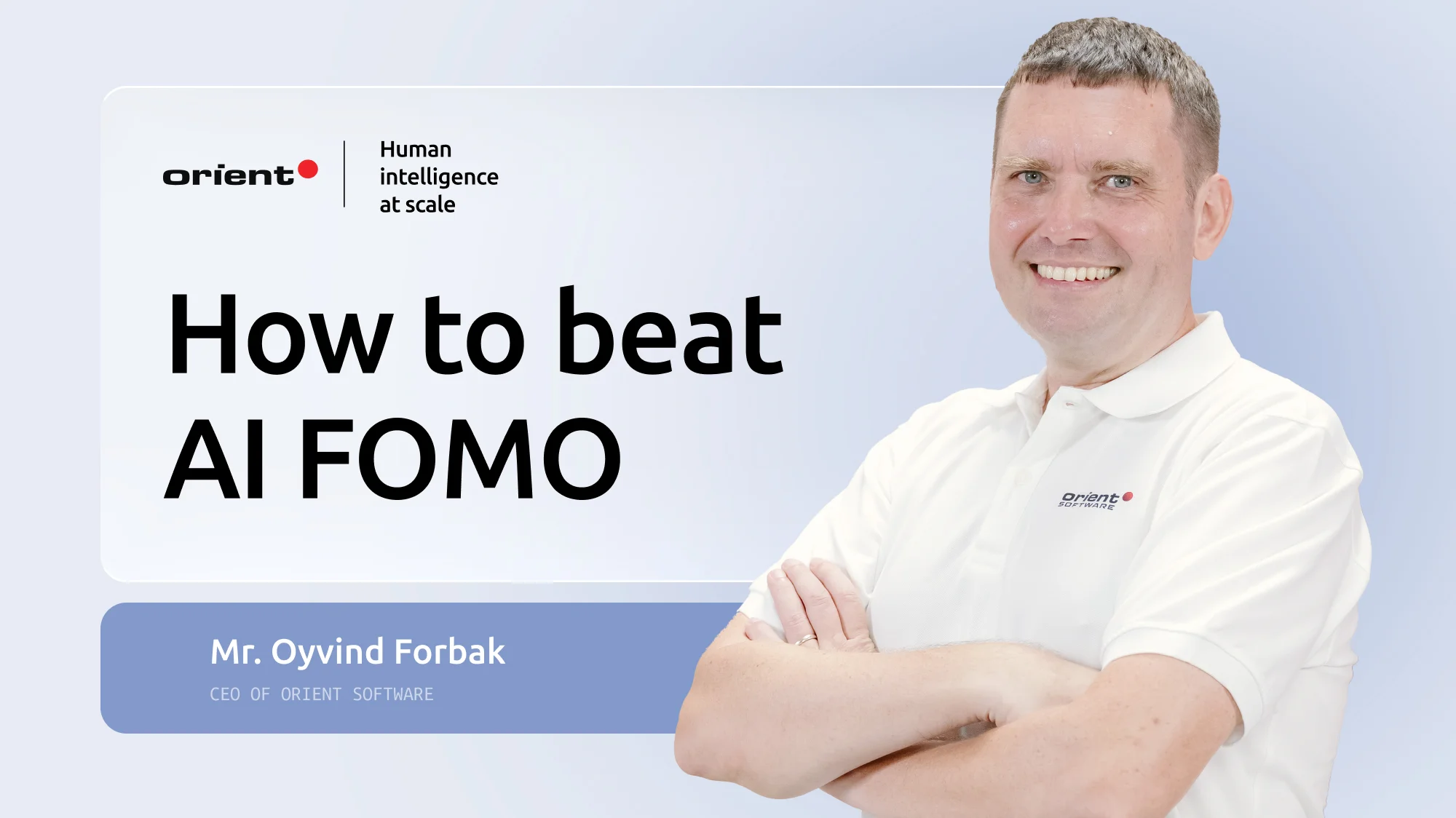
In today’s discussion, we will scrutinize AI adoption through the anti-FOMO filter of Øyvind Forsbak, the CEO and Co-founder of Orient Software, and a member of the Forbes Technology Council. With 25 years in the tech industry and 20 years running a Vietnam-based software development outsourcing powerhouse, Øyvind has firsthand experience navigating the tension of turning AI urgency into a disciplined adoption strategy. What follows is a closer look at the lessons learned, along with the practical moves Øyvind applied to make AI work in real business operations.
The Fear of Missing Out Through the Lens of an Expert
“I think that the hype is real,” Øyvind noted in a recent interview with ITViec about AI adoption strategies.
According to his sharing, when the “AI everywhere” wave hits, pressure becomes the emotional catalyst for action. Oftentimes, it follows a familiar pattern: Competitors announce AI initiatives, boards start asking about it, and teams begin experimenting. That’s how AI FOMO starts. It first appears in the form of curiosity and an intent to “do something with AI” without clarity before it escalates with urgency, resulting in anxiety and misdirection.

As for how the AI industry is progressing, business leaders will not need more hype. They demand a point of view shaped by real implementation, from what to prioritize and what to ignore to what conditions must be true before AI can fit in and deliver durable value.
However, AI FOMO does not necessarily mean something negative like panic, hype-chasing, or irrational decisions. Objectively speaking, Øyvind thinks the fear of missing out is not entirely bad if business leaders can view it as an early-warning indicator of profound technological shifts and organizational restructuring. Without some level of FOMO, many organizations would indefinitely postpone engagement with artificial intelligence under the guise of “waiting for clarity.” In the right dose, AI FOMO creates the necessary momentum for business transformation.
Rather than being afraid of falling behind in the race for AI trends, business owners should be concerned with mistaking urgency for real progress.
From the CEO’s Desk: Lessons to Learn & Proven Strategies to Turn AI Pressure into Competitive Edge
What follows are the lessons through pain a CEO/co-founder has learned, along with the practical moves he applied to make AI work in real business operations.
Don’t Rush! Get to the Root of Your Business Friction First
It is understandable that businesses feel pressured to start AI adoption as they see others’ superficial success. In the most natural way, they tend to immediately start finding advanced technologies like AI agents, tools, chatbots, etc., and searching for a place to plug them in. Øyvind claims that jumping straight into technology can be a mistake.

The valuable lesson learned here is: “AI is not all about technology; it’s a lot about how to solve business problems.”
Don’t mistake guesswork for progress. Rather than chasing instant speed and raw automation, it is advisable to aim correctly and embrace a slow AI mindset that prioritizes thoughtfulness and values human-AI collaboration. The right starting point is to diagnose real frictions and identify where they exist. For example, bottlenecks, delays, errors, rework, handoffs, and decision-lag. By changing the approach, we can transform AI FOMO into a focused, outcome-driven strategy.
If you fail to identify the real problem AI is meant to solve, you risk doing AI around rather than within your organization. Øyvind calls it “a classic example of technology before the problem.”
Unrealistic Expectations Lead to a Dead End. So, Avoid Hype-Driven Promises
“Many companies say they can double or triple their productivity with AI tools. But in our experience, that’s not true. At this point, we can probably improve things by around 30%,” said Øyvind Forsbak, CEO & co-founder of Orient Software.
A majority of founders and leaders implement AI solutions in business operations with a belief that they will soon unlock threefold or even tenfold productivity gains, instant automation, near-perfect accuracy, and a range of other so-called “miracle” outcomes. Unfortunately, that’s rarely how artificial intelligence works. Indeed, AI is powerful, but it is not a miracle. Real-world results can differ significantly from expectations. The hard truth is that AI will not magically solve all your problems or deliver a dramatic transformation almost immediately.

Speaking from experience, Øyvind reveals that the key to success lies in expectation management. Hype and FOMO often push leaders to think big and chase substantial wins. When you overestimate what AI is capable of delivering, you either end up disappointed or overinvest to force results. In both cases, meaningful success is far from your reach.
Unrealistic expectations not only set the wrong bar but also make real progress look like failure. Once people look forward to magic, anything less feels like failure, even if the solution is genuinely useful.
Therefore, do not fuel the FOMO with unrealistic excitement. Instead, stay pragmatic and frame your expectations around repeatable, measurable outcomes. Modest, visible gains, such as a 20% or 30% improvement in speed, quality, or throughput, may not sound flashy, but they are genuine and capable of driving real business value in the long run.
Get Your Data Ready, or AI Won’t Deliver
AI will not deliver value simply because it is implemented. “Data management plays a big role - makes up 80% or 90% of the work involved in deriving real value from AI.” Øyvind warns: “If you have a good strategy but you don’t have the data to solve your problem, then you will fail.”
In AI adoption, a problem is the reason to start, a strategy is a map to follow, and data is the road. Øyvind believes that proprietary data is what sets one company apart from another. What matters most is how you experiment with data, learn from it, and turn insights into scalable business advantages.

When fear of missing out dominates leadership thinking, data readiness is frequently assumed, ignored, or treated as a problem that AI itself will magically solve. That “naive approach” doesn’t work. Don’t think that strong engineering can “make up for” weak data because it won’t either. The best model still depends on reliable inputs in order to deliver accuracy and real value.
Gartner has been consistent on this point, asserting that data readiness is a critical factor behind both successful and failed AI initiatives, and even predicting that 60% of AI projects would fail by 2026 due to insufficient AI-ready data.
At this point, Øyvind’s useful tip is to invest in a data foundation early if you want durable adoption and a real advantage. Treat data readiness as a strategic prerequisite from the start instead of a cleanup task after the pilot. Even when you have no immediate plans to deploy AI yet, data preparation should remain a core part of your long-term strategy. Your data teams should get started today. Additionally, data readiness is not about “more data” but about usable and reliable data. Most business AI applications don’t fail due to a lack of data; they go wrong because the existing data is not structured for action.
“Additionally, data readiness is not about more data but about usable and reliable data. Most business AI applications don’t fail due to a lack of data; they go wrong because the existing data is not structured for action.”
Not Every Failure Is a Loss If You Can Actually Learn from It
Oftentimes, FOMO makes people label any setback as a failure. Whether it is a loss or a gain, don’t immediately jump to a conclusion just by judging the surface. Not every failed AI initiative is a waste of time and money if you can extract clear lessons from it, and vice versa.

In fact, some failed projects are valuable precisely because they reveal what was unclear at the beginning. For example, the real bottleneck is the data gap, the workflow exceptions, or the adoption friction. And in many business contexts, an AI solution that solves most of the problem (around 75%) can still be a win, as long as it’s deployed with the right guardrails and human oversight. That kind of progress is often enough to create meaningful value while showing you exactly what to fix, what to simplify, and what to stop doing. Meanwhile, the real loss is when a pilot produces no clarity, baseline, measurable outcomes, or insights into why it worked or didn’t. That’s when you burn time, budget, and even trust.
AI Adoption Is a Continuous Testing & Refining Cycle
Øyvind suggests: “AI is like doing research & development and adjusting continuously as you get more data.”

The success of AI efforts comes from iteration, not installation. Unlike using traditional software, you can simply pick and deploy it, implementing AI into a workflow or the entire organization, which demands not only a model but also an environment shaped by human intelligence and interaction.
When approaching augmented intelligence in a business context, the mindset should deliverable building to capability building. And business leaders should treat AI implementation as an ongoing research and development process, where you experiment, learn from the data, and continuously adapt.
Create an “AI Decision Boundary” for What Must Stay Human
This is not just about ethical considerations; it is about sustainable growth. If you don’t want to fall into the FOMO trap, adopt AI while prioritizing human skills. Double down on areas where humans still excel, such as creativity, critical thinking, ethical judgment, and contextual understanding.

Let’s look at a case study of AI rush: In 2024, a Swedish fintech company called Klarna, which has more than 150 million customers, had just begun an ambitious plan to automate its customer service chats. After only a month, the results were staggering. Unfortunately, Sebastian Siemiatkowski (CEO of Klarna) had spoken too soon. In May 2025, the tech boss admitted Klarna was too focused on cost-cutting at the expense of customer service. His firm would once again start hiring human agents. They now work alongside the AI systems, handling complex cases that require empathy, nuanced problem-solving, and the judgment calls that chatbots still struggle to make.
The lesson here is that AI works best as an accelerator that supports human expertise where it matters most, not a replacement. AI should not be treated as a shortcut to bypass human complexity. If you want to win with AI, begin with a simple truth: Business transforms when people change, not when AI is installed. This is why leaders must take a people-first approach with the focus on AI fluency, not tool training. When an organization’s staff becomes fluent, AI stops being an emergency.
Convert Fear & Uncertainty into Competence
In reality, when people hear AI adoption, they quietly translate it into legitimate concerns, namely job displacement, accountability for errors, data leakage, and reputational risk. That natural, justifiable fear triggers internal resistance, avoidance, or shadow usage - staff utilize AI outside the company’s systems and policies. Any of the mentioned may escalate and result in further consequences if not addressed directly.
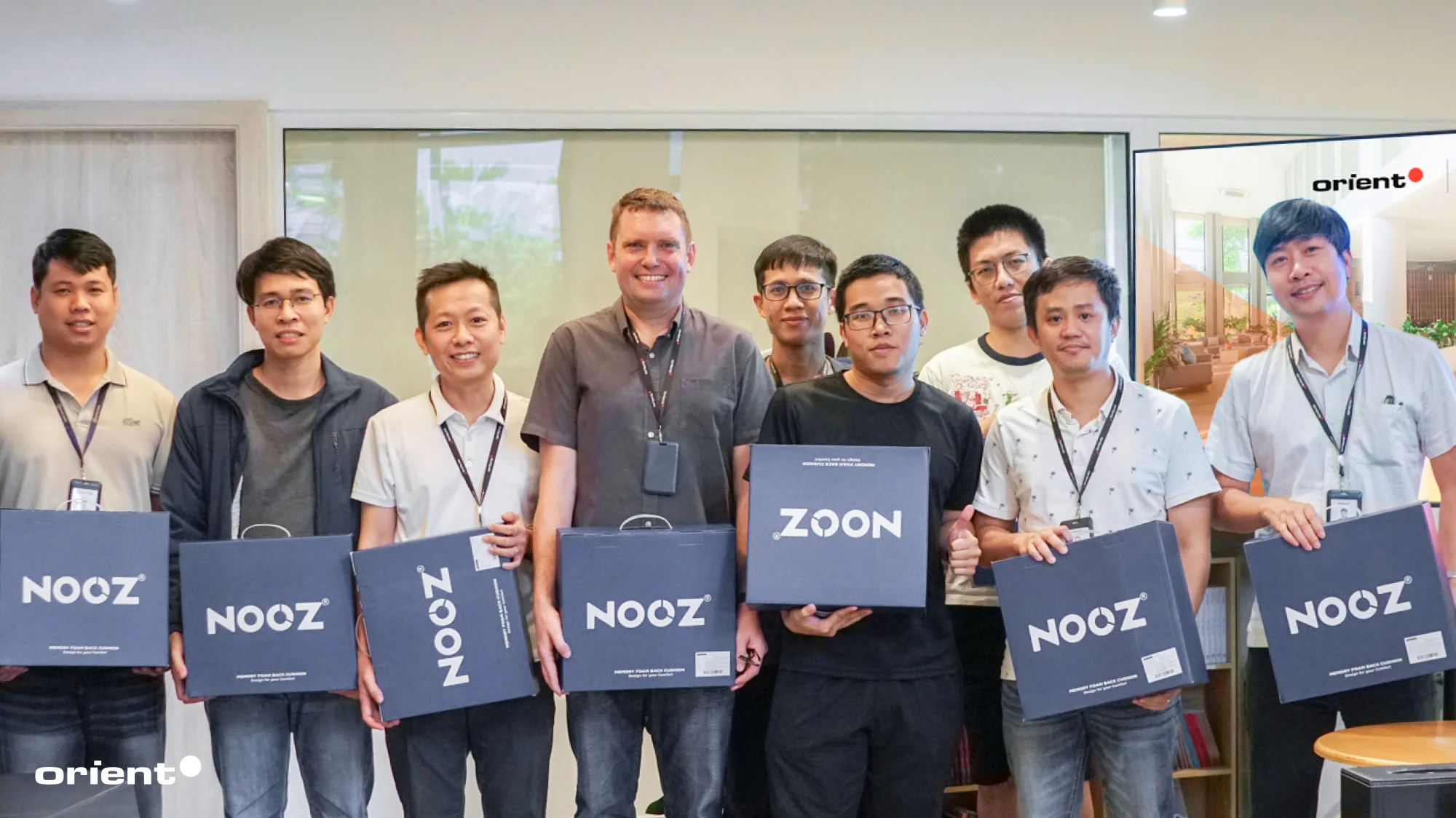
Indeed, tools can accelerate work, but they do not automatically change habits, motives, or trust. Hence, employees need an “antidote” to replace fear with fluency and convert uncertainty into competency. This is where leadership messaging matters.
Normalize adoption and reduce anxiety. Øyvind once shared with Forbes that a great way to make employees embrace new tech is for them to see that their leaders have started using it. Let’s show the teams how the leadership, including the CEO, CTO, directors, and managers, is actually using AI openly and treating it as an extended hand of support rather than a threat or a mandate. The ultimate goal is to impart the message that AI is not being introduced to replace people but to help them. It creates an atmosphere where employees feel safer learning AI while knowing everyone is still figuring it out.
Move Fast in Learning & Stay Disciplined in Scaling
“There isn’t necessarily a rush to adopt AI today, but make sure your business is ready for it when AI itself becomes ready.”
The answer to AI FOMO is not moving fast or slowly, but separating speed from recklessness. A two-speed operating model helps organizations do exactly that by running AI work in two distinct tracks: One optimized for rapid learning through low-risk experimentation, and the other optimized for production reliability, governance, and risk control. This is how companies explore quickly without turning urgency into a reckless rollout.

Also, AI FOMO tends to create two extremes: Rushed deployment with no controls, or perfectionism that delays value indefinitely, like waiting for the ideal model, the perfect data, or complete certainty before taking action. “Good enough” is the disciplined middle. Rather than chasing every new breakthrough, leaders should focus on understanding what AI can reliably do today and where it fits naturally within real workflows.
By aiming for little, visible progress, organizations build confidence and capability over time. This reduces anxiety, avoids costly overreach, and creates steady momentum. Sustainable AI success rarely comes from flawless first attempts. It comes from practical improvement, continuous refinement, and the humility to start with what works now.
Final Thoughts
Overall, fear of missing out on the power of AI is a defining leadership challenge of today. It creates a unique mix of pressure and uncertainty: Boards want answers, competitors move loudly, employees experiment quietly, and the future feels urgent before it feels clear. In such a context, the temptation is to rush, to overpromise, and to treat AI as a magical shortcut to transformation.
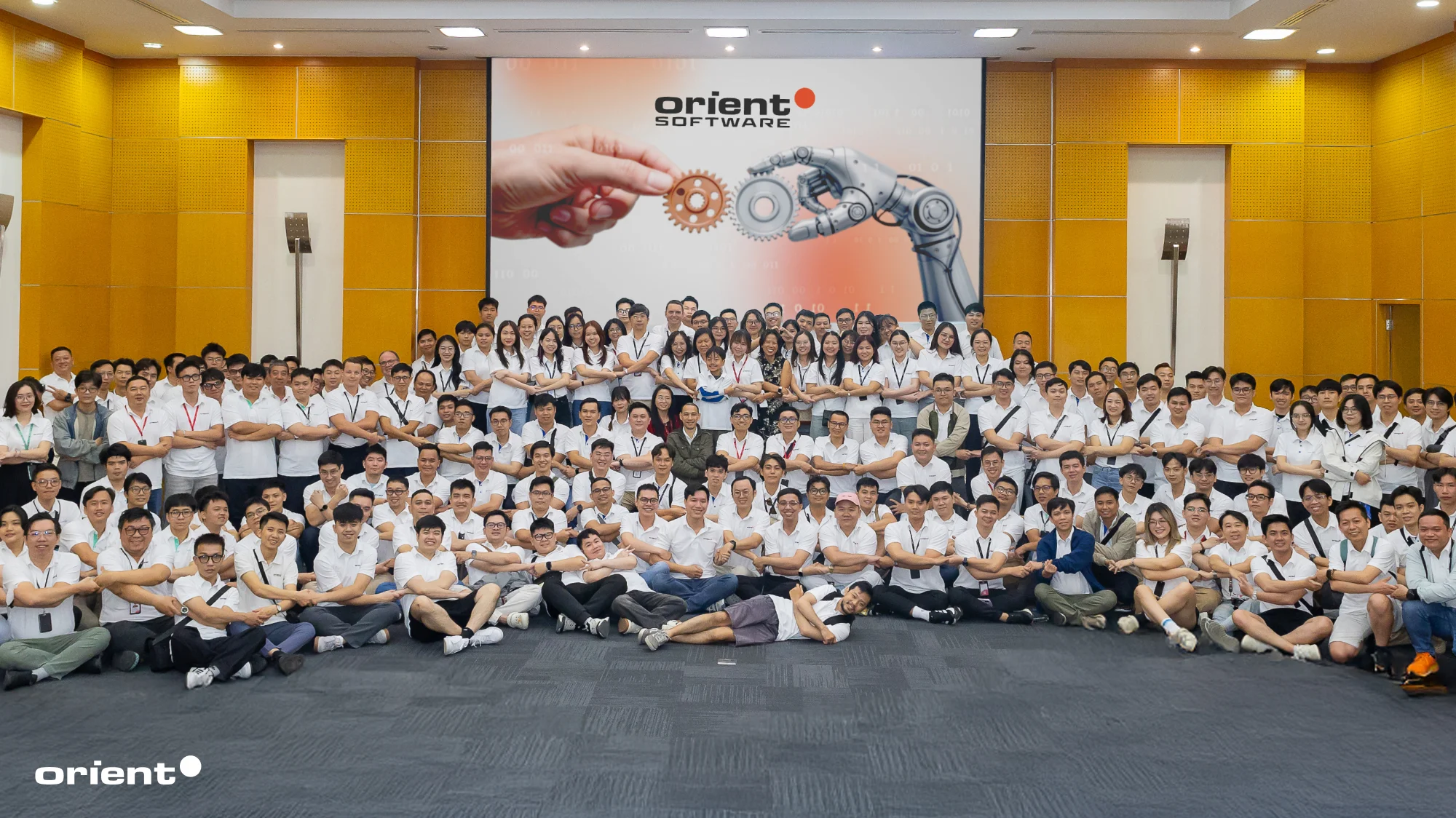
However, as Øyvind Forsbak, the CEO and co-founder of Orient Software, pointed out above, AI itself is not the advantage; the true competitive edge is what a business can build around it. The healthy relationship with AI is to learn and scale alongside it, not chasing or forcing it. Organizations overcome FOMO when they stop asking, “How do we adopt AI fast?” and start asking, “What business friction are we solving, what foundations do we need, and what must remain human?”
Last but not least, a useful tip is not to look at others’ polished achievements and compare them with your AI experiments, progression, and confusion. The companies that win with AI are not the ones deploying the most tools, but the ones that can achieve fluency and build the strongest operating model around the technology itself. In the end, AI adoption may feel uncomfortable, because it demands real, big change. But that discomfort is often the price of maturity. The organizations that thrive are those that stay grounded, learn steadily, and turn early uncertainty into long-term capability as well as pressure into durable capability. When approached with discipline and patience, AI becomes not a source of rush or panic, but a compounding advantage that strengthens the business over time. Good luck with your AI journey.